
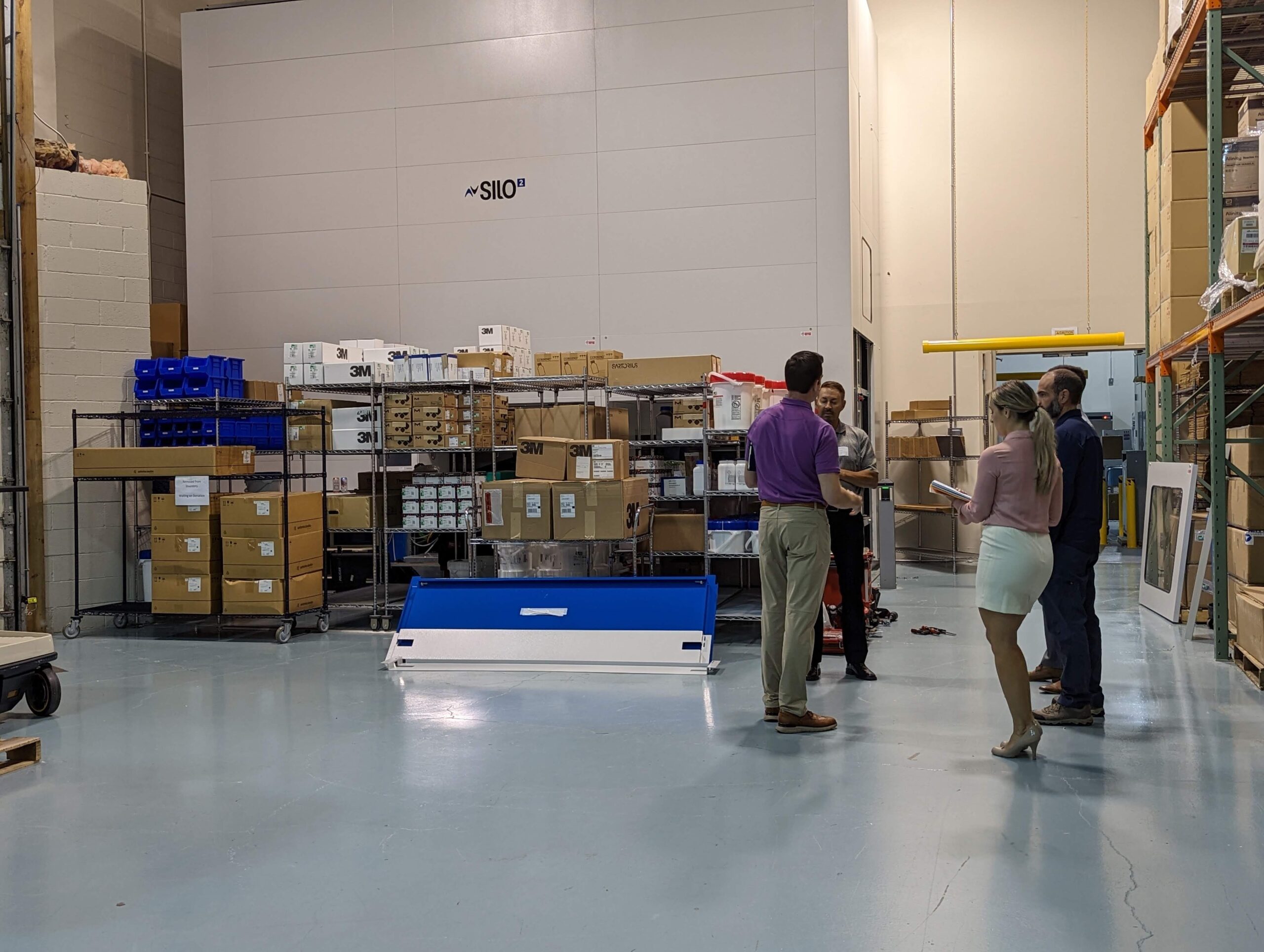
Another common question for us! it’s a lot less invasive and disruptive as you might expect—we’ve got it down to a science (pun intended). Whether you’re a lab manager, a clinical director, or just curious about how our RFID-based tracking solutions come to life, here’s a transparent look at what you can expect.
First Step: Your Custom Design
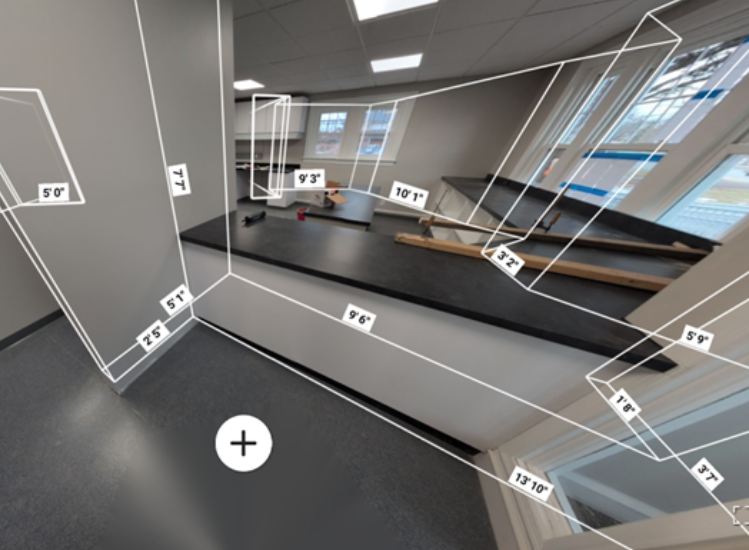
Every lab is unique—and so is every installation we deliver. We never force a “one size fits all” model onto your facility. Instead, our process begins with an in-person visit, where we walk through your space, observe how materials and people move, learn “who does what” along with their unique wants, needs, workflows and pain points, and discuss what you’d like to track and achieve. This collaborative approach lets us share insights from other labs using our system, highlighting features and workflows you might want to take advantage of. After this discovery phase, we create a custom design tailored to your needs, share and discuss the proposal with you, and then plan the installation together.
How Long Does Installation Take?
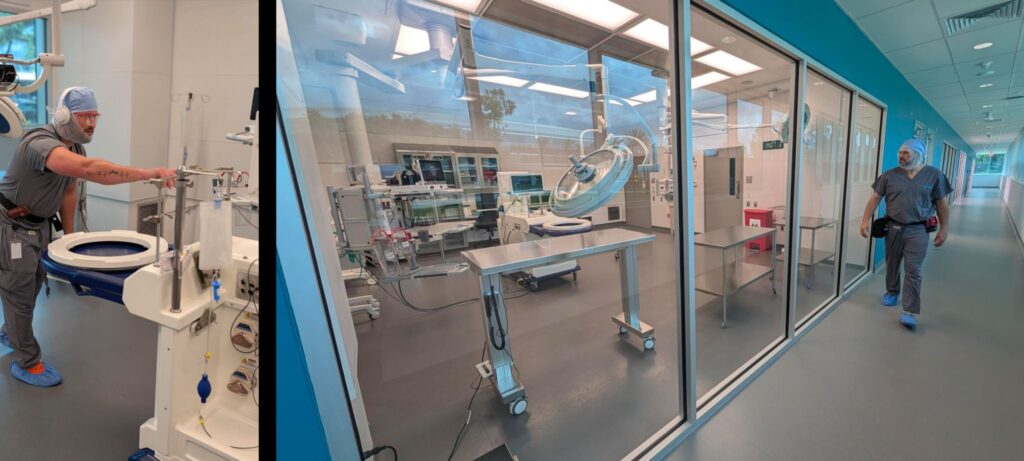
Most installations are completed in 1–2 days, though larger or more complex sites may take up to a week. We pride ourselves on minimizing disruption—often working in sensitive areas where cleanliness and discretion are paramount. In some cases, we even suit up in protective gear (“bunny suits”) to meet strict environmental requirements. Our teams are experienced in working in spaces where “no mess” is non-negotiable.
What Are We Installing?

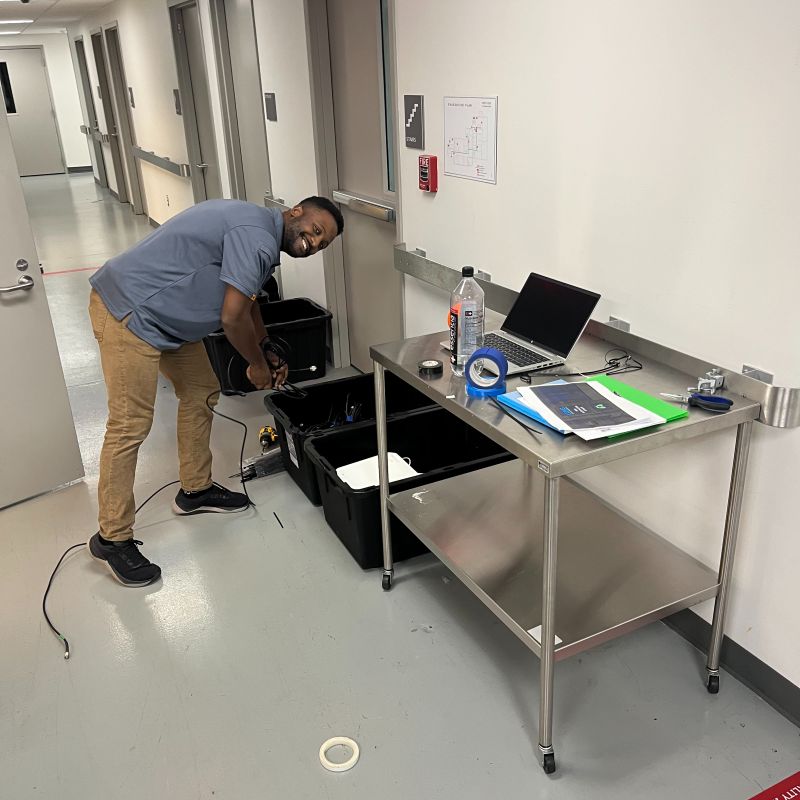
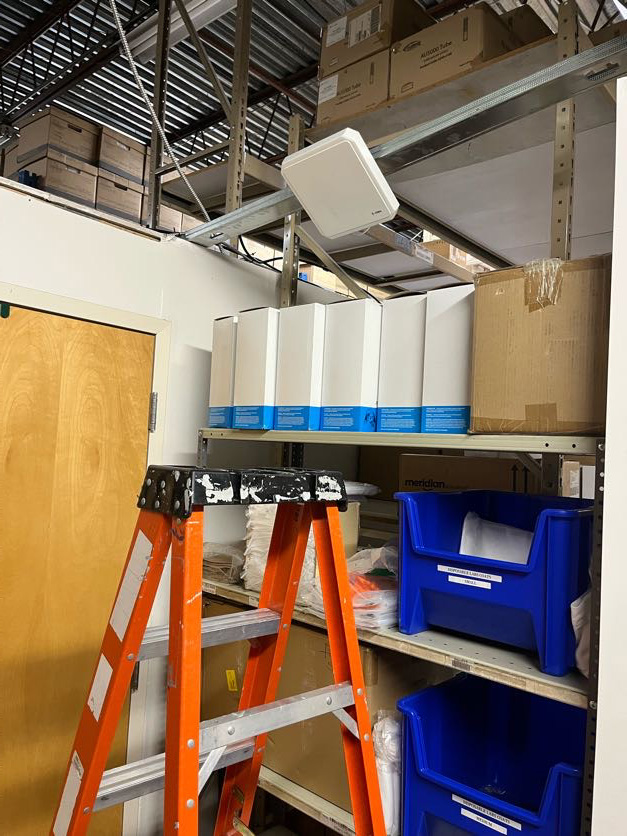
The backbone of our system is a network of antennas, readers, and hubs. These components are strategically placed—usually in inconspicuous locations like drop ceilings, above shelves, mounted underneath workstations, or tucked away in corners. For example, at a recent installation, our team ran ethernet cables above ceiling tiles, installed Power-over-Ethernet (POE) switches in hidden spots, and mounted readers and antennas above doors, in storage rooms, and near specimen racks. Every cable run and device placement is planned to keep the workspace tidy and equipment out of the way and unobtrusive.
Hardware First, Then Software
Once the hardware is in place, we configure the software that makes everything “talk.” This includes:
- Site-specific workflows: Each location gets its own custom setup, with unique nomenclature and zones.
- Custom thresholds and alerts: For example, if a hazardous material isn’t returned to storage, a temperature excursion is detected, or if inventory drops below a set level, the system can send alerts or trigger reorders.
- Data and reporting: The system is designed to provide actionable insights, tailored to your operational needs (e.g. the number of biopsies expected to arrive tomorrow, the amount of a specific reagent on-hand).
Optimization and Training
After installation, we typically spend a few weeks optimizing the system—tweaking antenna placements, refining workflows, and ensuring maximum accuracy. During this period, the system is often already live and quietly working in the background. Staff training is straightforward; most users find the system very intuitive, and we’re always available for support. In fact, it’s not uncommon for teams to ask, “When are you installing?” only to discover the system has been running smoothly for weeks while we were fine-tuning!
Documentation? Check!
We believe that transparency and clarity are just as important as the installation itself. That’s why every project is fully documented—from start to finish. After your installation, you’ll receive a comprehensive report that includes:
- Annotated photos of every device, antenna, and cable run, showing exactly where each component is placed.
- Detailed blueprints and hardware maps so you know the precise locations of all readers, antennas, and hubs.
- Clear equipment tables listing serial numbers, MAC addresses, and IP addresses for every installed device.
- Installer notes that explain the rationale behind placement and configuration decisions.
This documentation ensures you have a complete record of what was installed, where it’s located, and how it’s set up. Whether you need to reference a specific device, plan future upgrades, or simply want peace of mind, you’ll always know exactly what’s in your facility and how it works
In Summary
A typical installation is fast, clean, and tailored to your environment. We handle everything—from hardware setup to software configuration, optimization, and training—so you can focus on what matters most: your work.
Curious about how our solutions could fit your space? Reach out for a personalized walkthrough!